
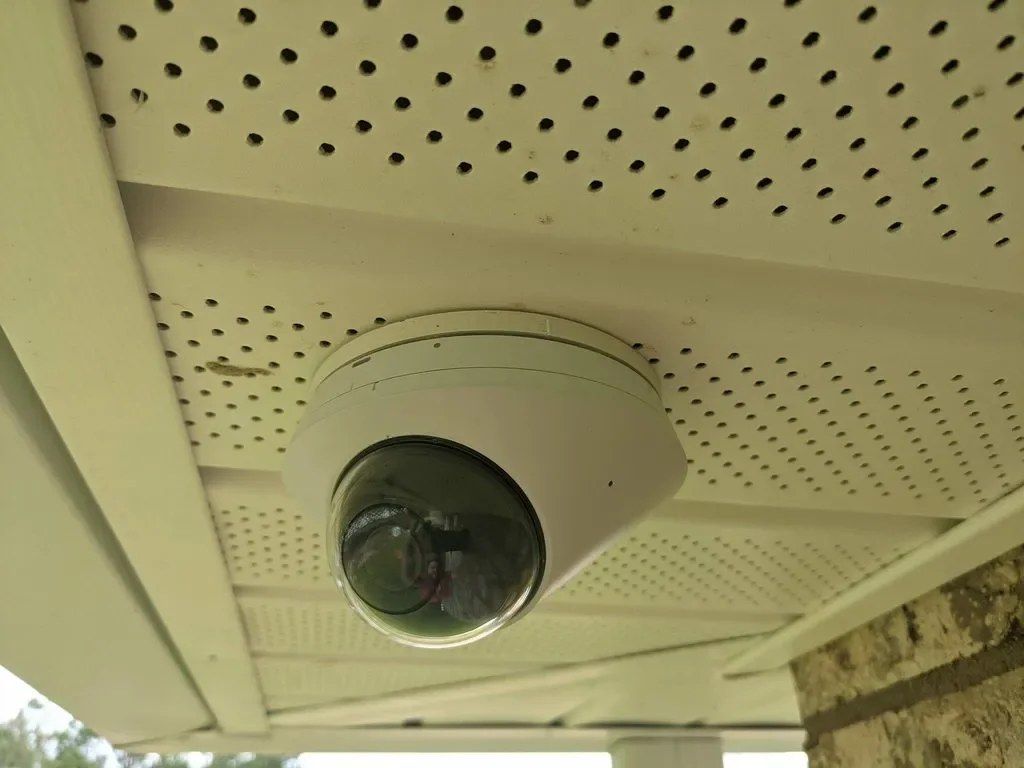
Walk into any shop at The Avenue Viera or a restaurant in the Olde Eau Gallie business district and you will spot them: small dome cameras keeping quiet watch over the register, the dining room, and the back door. If you own a storefront, restaurant, or small office anywhere in Brevard County, you have probably asked the question we hear on almost every site visit: how many security cameras do I actually need? The short answer for most small businesses is 4 to 8. Restaurants usually land between 6 and 10. But the right number has less to do with square footage and more to do with how your space actually works, so here is how to count.
How Many Security Cameras Does a Small Business Need?
Camera count follows a simple rule: cover every door, every dollar, and every blind spot. Before you price a single camera, walk your space the way a customer, an employee, and a shoplifter each would. The zones that matter for nearly every small business are the same:
- Entrances and exits. Every public and staff door should get a clear, face-height view of everyone coming and going.
- Point of sale. The register and cash drawer are the most valuable camera angle in retail, both for theft and for settling chargeback disputes.
- Sales floor or dining room. One or two wide-angle cameras usually cover the customer area of a typical storefront.
- Stockroom and back office. A large share of retail shrinkage happens away from customers, not in front of them.
- Exterior and parking. Coverage of the sidewalk, rear door, and parking area protects your team at opening and closing.
- Restaurant extras. Patios, delivery doors, and bar areas each usually justify a camera of their own.
Add those up for a typical 1,500 square foot storefront and you land at 4 to 6 cameras. A full service restaurant with a bar, a patio, and multiple kitchen access points usually needs 6 to 10. A small professional office in Viera or downtown Melbourne is often covered with 4 to 8, weighted toward entrances and any room holding servers or records. Placement beats quantity every time. Six well-placed cameras will outperform twelve mounted wherever the wiring happened to be easy.
Where Cameras Pay for Themselves in Retail and Restaurants
For most Space Coast business owners, cameras stop feeling like an expense the first time they settle an argument. Shrinkage is the obvious one. Inventory walks out a few items at a time, and visible cameras change behavior at the register, in the aisles, and in the stockroom. Liability claims are the sleeper. A slip and fall claim with no footage becomes your word against theirs, while thirty days of recorded video has ended more than one questionable claim before it ever reached an insurer.
Safety matters just as much. For a manager counting the drawer alone at 11 pm behind a restaurant in Eau Gallie, an exterior camera paired with a live phone view is a real safety tool at opening and closing. And for owners running two or three locations between Rockledge and Palm Bay, remote check-ins from a phone replace a lot of driving. You can confirm the store opened on time, watch the lunch rush, and check that the lights are off at midnight without leaving your couch.
Looking for reliable IT support in Brevard County? The Electpros serve Melbourne, Palm Bay, Viera, Titusville, and the entire Space Coast with same-day availability. Call (321) 655-PROS or book a free consultation at theelectpros.com.
What a Professional Camera Installation Includes
There is a real difference between a box of consumer Wi-Fi cameras and a commercial system designed for a business. A professional business security camera installation starts with a site walk and a placement plan built around your doors, registers, and blind spots, not around wherever a battery camera can stick to a wall.
The backbone is wiring. Commercial cameras run on PoE, which means one properly routed cable delivers both power and video, with no batteries to change and no Wi-Fi dropouts during a busy Friday dinner service. Every camera is only as reliable as the cable behind it, which is why we treat camera projects as structured cabling and commercial networking work first and camera mounting second.
On the hardware side, we install Unifi Protect systems with a local network video recorder, thirty days or more of on-site retention, and smart alerts that can tell a person from a passing headlight. There are no required monthly cloud fees, and your footage stays on your property. It is the same platform family we deploy for high-security environments, and we covered that end of the spectrum in our guide to physical security for Brevard County defense contractors.
What Does Business Camera Installation Cost in Brevard County?
Most small business systems land between $1,500 and $8,000 installed. A basic 4-camera storefront package with a network video recorder typically starts around $1,500 to $2,500. An 8 to 10 camera restaurant build with longer cable runs, exterior mounting, and patio coverage usually falls between $4,000 and $8,000. The variables that move the price are camera count, cable paths and ceiling type, exterior work, and whether your network needs a PoE upgrade to support the system.
One number worth comparing before you buy: consumer cloud cameras look cheap on day one, then charge per camera, per month, forever. A commercial system with local storage is a one-time investment, so over five years it usually costs less than the subscription route while delivering better video quality and longer retention.
Whether you run a boutique near The Avenue Viera, a restaurant in Eau Gallie, or a professional office in Palm Bay, the right camera system is the one designed around your doors, your registers, and your closing routine. The Electpros design and install commercial camera systems across Brevard County, from Titusville to Palm Bay, with same-day service availability. Call (321) 655-PROS or book a free consultation and we will walk your space with you.