
Kickoff is about five weeks out, and if you own a sports bar or restaurant on the Space Coast, that is your deadline. Not the week before. Now. Every year we get the same call in early September from a downtown Melbourne bar owner who just realized four of their TVs are the wrong size, two are consumer models that have already dimmed out, and there is no way to get the right game audio to the right side of the room.
Football season is the single biggest revenue swing of the year for a game-day bar. The difference between a packed house and a half-empty dining room often comes down to something dull: how many screens you have, where they point, and whether people can actually hear the game they came for. Here is how to get it right before the first Sunday.
How Many TVs Does a Sports Bar Actually Need?
The honest answer is that TV count is a function of sightlines, not square footage. The right question is not "how many TVs fit" but "can every seat in the house see at least two screens without turning around?"
That said, here is the working rule we use when we walk a room in Eau Gallie or near Port Canaveral:
- Small neighborhood bar, roughly 40 to 60 seats: 6 to 10 displays
- Mid-size sports bar with a patio, 80 to 120 seats: 12 to 20 displays, including 2 to 4 weather-rated outdoor screens
- Large game-day venue, 150 or more seats: 20 to 30 plus a video wall as the anchor
- Every booth or high-top should have a clear line to a screen inside 25 feet
- One display behind the bar for staff, so bartenders are not craning around guests
The number that matters more than the total is the dead zone count. Walk your room on a Saturday, sit in every seat, and mark the ones where a guest has to swivel. Those are the seats that turn over slowly and tip poorly on a Sunday afternoon.
Commercial Displays vs Consumer TVs: The Mistake That Costs the Most
This is where most owners lose money without knowing it. A consumer TV from a big box store is engineered for about 6 to 8 hours a day in a climate controlled living room. A sports bar runs displays 12 to 16 hours a day, seven days a week, often near a kitchen line or an open patio door in Florida humidity.
Commercial displays are built for that duty cycle. They also give you things a consumer set never will: a landscape or portrait mounting rating, higher sustained brightness so a screen near a window in a Cocoa Beach dining room is still readable at 2pm, RS-232 or IP control so every screen powers on and off on a schedule, and a commercial warranty that does not void the moment the manufacturer learns it is in a business.
Consumer TVs also burn in menus and scoreboard bugs faster, and their tuner-based inputs make centralized control a nightmare. When you have 14 screens and every one needs its own remote, your staff will eventually just leave them all on one channel. That defeats the entire point.
Video Wall or Many Screens? How to Decide
A video wall is not a replacement for distributed screens. It is a focal point. The two solve different problems.
- Go with more distributed displays when your layout is broken up by booths, partitions, or a long bar. Coverage beats spectacle in a narrow room.
- Go with a video wall when you have one main sightline wall and want a signature look, or when you want to show one marquee game huge while smaller screens carry the rest.
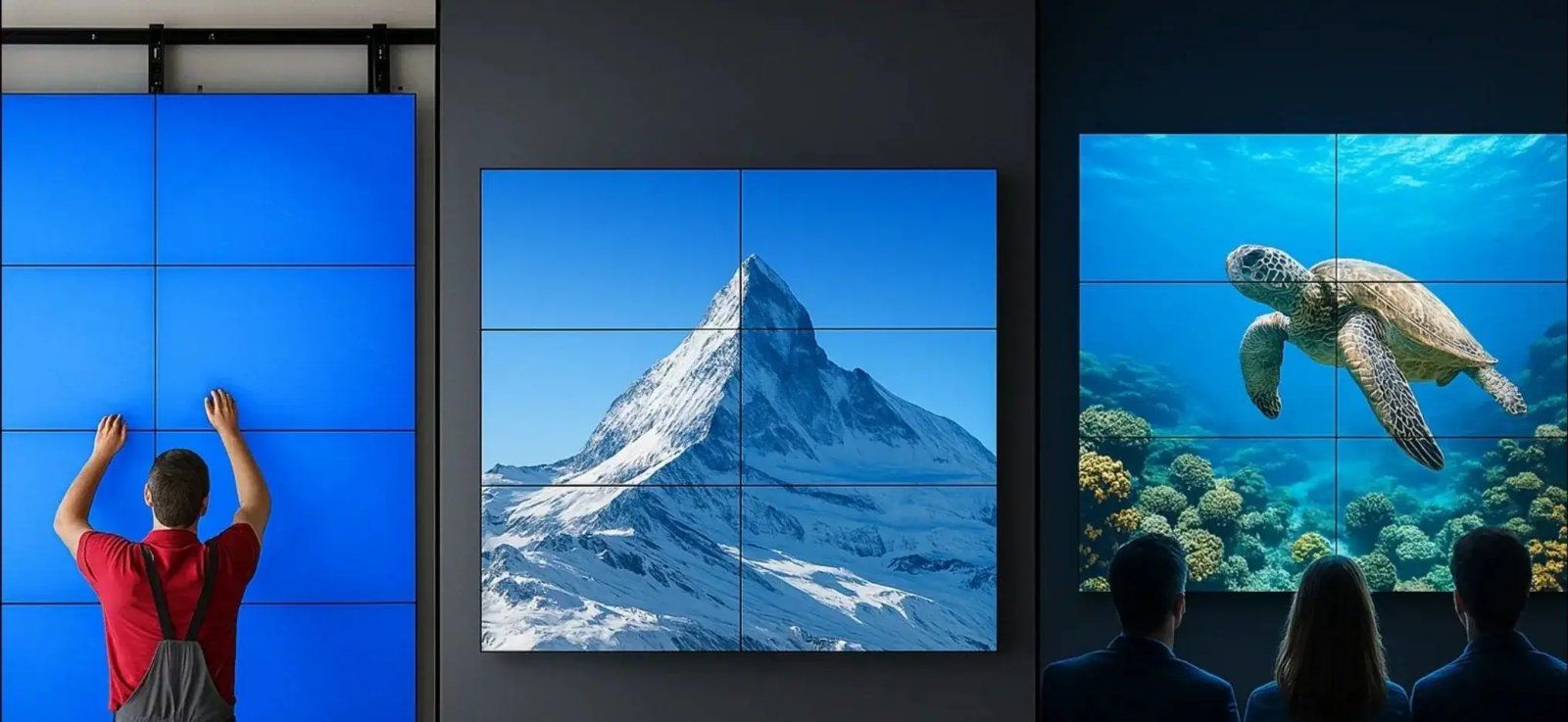
- A 2x2 or 3x3 commercial video wall gives you flexibility a single large TV cannot: one giant image for the primetime game, or split into four or nine independent feeds during the noon slate.
- Video walls also do double duty in the off-season for drink specials, event promos, and live social feeds.
If you are weighing a wall against a bank of separate screens, our video wall installation services page walks through the panel options, bezel widths, and mounting depth you need to plan for. We handle the design and the install for restaurants across Melbourne, Palm Bay, and Merritt Island.
Looking for reliable IT support in Brevard County? The Electpros serve Melbourne, Palm Bay, Viera, Titusville, and the entire Space Coast with same-day availability. Call (321) 655-PROS or book a free consultation at theelectpros.com.
Audio Zones: The Part Everyone Forgets
Screens are the easy half. Audio is what separates a real sports bar from a room with a lot of TVs in it. Nobody wants to watch a muted game with a classic rock playlist over the top of it.
Zoned audio lets you split the room so the bar side hears the marquee game, the patio hears a second game, and the dining room stays on background music at conversation level. A properly zoned system means a table can ask for the sound on their game and the answer is yes instead of an apologetic shrug.
A few things we design for in every game-day room:
- Separate volume control per zone, so the patio can go loud without blowing out the dining room
- Enough speaker density that volume stays even, instead of two loud spots and four dead ones
- A simple wall panel or tablet control your staff can actually operate on a busy Sunday
- Weather-rated speakers for any outdoor or covered patio area, which matters year round here
- Ducking or priority override so announcements and last call cut through cleanly
All of this rides on your network. Streaming apps, IPTV feeds, digital signage, and IP-controlled displays all pull from the same backbone, and a consumer router will choke on a full house. Solid commercial networking and structured cabling is what keeps 16 screens from buffering during the fourth quarter.
Getting Installed Before Kickoff
Commercial displays are not always in stock, and mounting hardware for a video wall is a lead-time item. Add electrical work, cable pulls above a finished ceiling, and the fact that you cannot close your dining room on a Friday night, and a full game-day AV build realistically needs three to four weeks from walkthrough to first game.
We work around service hours. Most of our restaurant installs in the Olde Eau Gallie business district and downtown Melbourne happen in morning blocks before doors open, so you never lose a shift. For venues near Port Canaveral that see cruise-day traffic, we schedule around your peak days instead of yours around ours.
If you are also rethinking your menus and specials while the installers are on site, it is worth doing both at once. Our guide on what a digital menu board costs for Brevard County restaurants covers the signage side, and running both projects together saves a second round of cable pulls.
Book Your Walkthrough Now
The bars that pack out every Sunday are not the ones with the most TVs. They are the ones where every seat is a good seat and every table can hear the game they care about. That takes a plan, not a shopping cart.
The Electpros design and install commercial displays, video walls, and zoned audio for restaurants and bars across Melbourne, Palm Bay, Cocoa Beach, Merritt Island, and Titusville. We handle the full commercial AV and IT build, from the network up. Call (321) 655-PROS to book a walkthrough while there is still time to be ready for week one.