
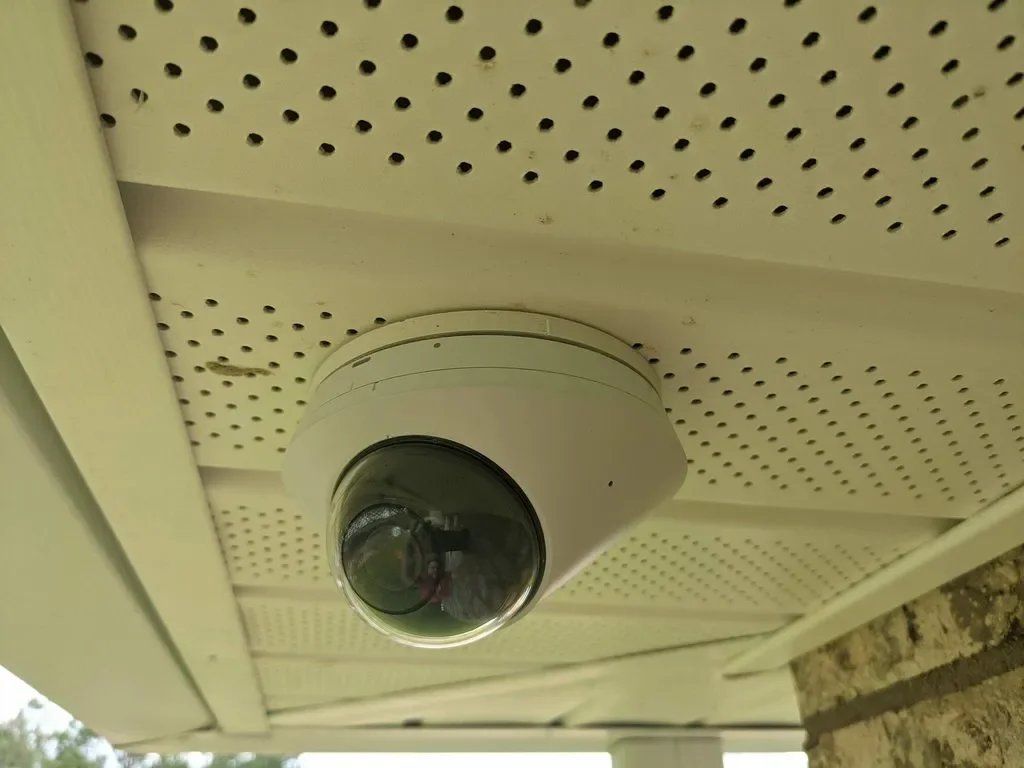
If you have shopped for home security cameras lately, you already know the pitch. The camera is cheap, sometimes almost free with a promotion, and then the monthly plan starts. Ten dollars here, fifteen there, one plan per camera unless you upgrade to the premium tier. Add a few cameras around a Suntree or Bayside Lakes house and you are suddenly paying more per year for cloud storage than you paid for the hardware.
So the question we hear constantly from homeowners in Melbourne, Viera, and Palm Bay is a fair one: what security cameras work without a subscription? The short answer is that plenty of them do, as long as the system records locally instead of shipping every clip to somebody else's server. Here is how that actually works, and what it takes to get it right in a Florida home.
Why Subscription Cameras Add Up Faster Than You Expect
Most consumer camera brands make their real money after the sale. The camera itself is a loss leader. The recurring plan is the product. Before you commit, look at what the monthly fee is actually buying:
- Cloud video storage, usually 30 to 60 days of clips, then everything older is deleted
- Person, package, and vehicle detection, which is often locked behind the paid tier
- Rich notifications and the ability to review a clip instead of just a still image
- Extended warranty or professional monitoring bundled in whether you want it or not
At four to eight cameras, a typical Brevard County home is looking at somewhere between 150 and 400 dollars a year, every year, for footage you do not own and cannot access if the company changes its pricing or shuts the service down. Homeowners who bought cameras from brands that no longer exist have learned that lesson the hard way.
How No Subscription Cameras Actually Work
Systems that skip the monthly fee record to hardware you own. Instead of uploading clips to a data center, each camera streams over a network cable to a local recorder, sometimes called an NVR, that sits in a closet or equipment rack in your house. That recorder holds a hard drive, and the drive holds your footage. Thirty days, sixty days, a year, however much storage you buy.
The cameras themselves run on Power over Ethernet, which means a single Cat6 cable carries both the video and the power. No outlet needed at the camera, no batteries to swap out on a ladder in August heat, and no reliance on Wi-Fi that may or may not reach the back corner of the property. That last part matters more in Florida than most places, because concrete block, stucco, and foil-backed insulation are rough on wireless signal.
You still get remote viewing on your phone, and you still get smart detection. The difference is that the processing happens on your equipment rather than behind a paywall. This is the same principle behind a properly installed video doorbell, where the hardware is only as good as the wiring and the network behind it.
Ready to stop paying monthly for your own footage? The Electpros serve all of Brevard County, including Melbourne, Palm Bay, Viera, Titusville, and beyond, with same-day and next-day availability. Call (321) 655-PROS or book online at theelectpros.com.
What We Install in Brevard County Homes
For most homes we install UniFi Protect. The cameras record to a local UniFi recorder with no monthly fee at all, the app is genuinely good, and the system scales from three cameras on a Palm Bay ranch house to twenty across a Tropical Trail riverfront property on Merritt Island without changing platforms. Our home security camera installation work is almost always UniFi for that reason.
A few situations where the local recording approach really earns its keep on the Space Coast:
- Snowbird and second homes in Cocoa Beach and Melbourne Beach, where you want eyes on the place from October through April without trusting a cloud plan you might forget to renew
- New construction in Viera East and Addison Village, where running camera cable before drywall costs a fraction of what it costs afterward
- Larger lots in west Palm Bay and out toward Malabar, where you need cameras at a gate or detached garage far past the reach of house Wi-Fi
- Storm season, when internet service can drop for a day or two and a local recorder just keeps recording anyway
How Many Cameras Does a Home Actually Need?
Most Brevard County homes land between four and eight cameras. The goal is not blanket coverage of every square foot, it is covering the places a person has to pass through. A practical starting layout looks like this:
- Front door and driveway, the two highest value views by a wide margin
- Back slider or lanai door, which is the most common point of entry after the front
- Side yard or gate, especially on the narrower lots common around Port Malabar and the Wickham Road corridor
- Garage interior, which doubles as a package and vehicle camera
- Pool deck or dock if you have one, both for security and for keeping an eye on kids
Resolution matters less than placement. A 4K camera aimed at a rooftop is worth nothing. A well-positioned 2K camera at eight to ten feet, angled to catch faces rather than the tops of heads, will identify a person every time.
What to Sort Out Before You Buy Anything
The cameras are the easy part. The install is where these systems succeed or fail. Cable has to be run cleanly through attic space that hits 130 degrees in summer, terminated properly, and landed on a switch that can actually deliver PoE to every camera at once. The recorder needs a spot with airflow and a surge-protected circuit, which is not optional in a county that gets as much lightning as this one. And the whole thing rides on your home network, so if the network is a builder-grade router in a closet, that gets addressed first.
This is the same set of problems we wrote about in our guide to why video doorbells keep going offline. The device is rarely the issue. The power and the network behind it usually are.
One more thing worth deciding up front: how much footage you want to keep. Two terabytes covers roughly a month for a small system. If you travel for months at a time, or you want a full season of history on a rental property, size the drive for that from day one instead of discovering the gap after something happens.
Own Your Footage Instead of Renting It
A no-subscription camera system costs more up front and nothing after that. Over five years it is almost always the cheaper path, and it is definitely the more private one, because the video lives in your house rather than on a server you do not control.
The Electpros install UniFi camera systems across Brevard County, from Titusville down through Melbourne, Indialantic, and Palm Bay. We handle the cable, the recorder, the network, and the phone setup, and we walk you through the app before we leave. Call (321) 655-PROS or book online at theelectpros.com to get a quote.